
Table of Contents
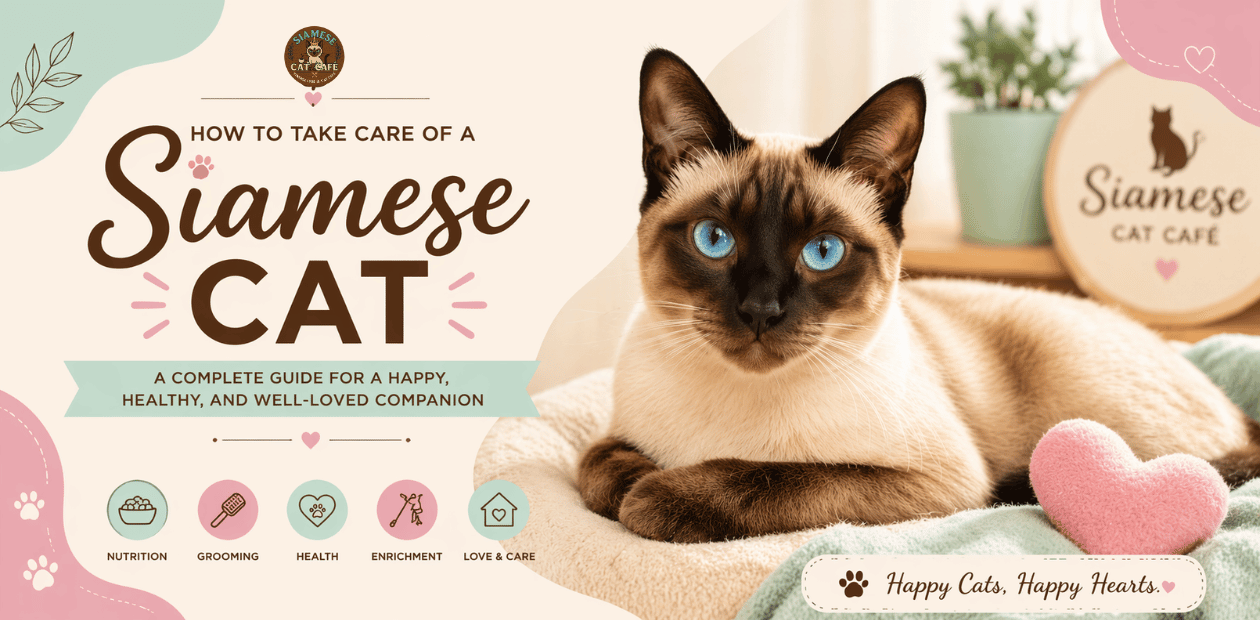
How to take care of a Siamese cat is something every owner should understand before bringing this intelligent and affectionate breed home.
Their beautiful blue eyes the way they talk to you and how they always want to be part of what you’re doing make them super special friends. They do need the right care to be happy and healthy.
This guide will tell you everything you need to know about taking care of a cat. We’ll cover their personality what they should eat, how to groom them their health and daily routines.
1. Understanding the Siamese Cat Personality
Caring for this breed starts with understanding how they think and behave. When you truly understand their personality, how to take care of a Siamese cat becomes much easier and more natural in everyday life.
Siamese cats are special because they are:
- Highly social which means they love people
- Extremely vocal, which means they meow a lot
- Emotionally intelligent, which means they can sense how you are feeling
- Strongly attached to their owners, which means they love to be around you
Siamese cats do not like to be alone for a time. If you leave them alone for long and do not pay attention to them they may get anxious or start breaking things.
👉 Tip: If you are away, from home a lot you should think about getting two cats. This way they can keep each company when you are not there.
Good to know: If you’re away from home for long hours regularly, consider getting two Siamese cats so they keep each other company. A lonely Siamese will often become destructive or develop anxiety-related behaviors.
2. How to Take Care of a Siamese Cat with the Right Diet and Nutrition
Feeding your cat properly is one of the most important parts of how to take care of a Siamese cat. A balanced diet not only keeps them active but also helps prevent many long-term health issues.
Wet food vs. dry food
Cats should always eat meat. High-quality wet food makes an excellent foundation for a Siamese cat’s diet since it provides natural hydration. Look for dry food that includes named protein sources at the top of the ingredients list, such as chicken, turkey, or salmon.
Amount to feed
Adult Siamese cats generally thrive on two carefully measured meals each day. Start with the guidelines listed on the packaging of your cat’s food. The ideal body condition for an adult Siamese cat will be firm throughout the spine without being skinny.
Do not give
- Onions and garlic (highly toxic)
- Chocolate and caffeine (extremely toxic)
- Grapes and raisins (may cause kidney failure)
- Milk and dairy products (most cats lack the ability to digest lactose)
Hydration
Ensure access to clean and fresh water at all times. Many Siamese cats enjoy drinking moving water. A cat water fountain can help increase the amount of water consumed by Siamese cats, improving kidney health.
Important: Siamese cats have a genetic predisposition to certain kidney and liver conditions. A high-quality, protein-rich diet with good hydration is one of the best preventative measures you can take.
3. Grooming Is Easy (But Still Important)
Here’s one area where Siamese cats are genuinely easy: their grooming requirements are minimal compared to long-haired breeds. That said, a little help from you goes a long way to ensure you know how to take care of a Siamese cat correctly.
Dental care: Brush your cat’s teeth two to three times a week using a cat-safe enzymatic toothpaste.
Brushing: Brush your Siamese once or twice a week to remove loose hair and distribute natural skin oils.
Bathing: Siamese cats rarely need baths unless they get into something messy.
Ears and eyes: Check the ears weekly for wax buildup. If you notice persistent redness or excessive discharge, see a vet.
Nail trimming: Trim your Siamese’s claws every two to three weeks.
4. Exercise & Mental Enrichment
If you ever wonder why your Siamese cat seems restless, the answer is usually a lack of stimulation. Regular play and engagement are essential parts of how to take care of a Siamese cat the right way.
Leash training: Many Siamese take to leash training enthusiastically, which provides great outdoor enrichment.
Daily play sessions: Aim for at least two 10–15 minute interactive play sessions each day.
Puzzle feeders: Food puzzle toys make mealtimes mentally stimulating and slow down fast eaters.
Vertical space: A tall, sturdy cat tree placed near a window gives your Siamese a perch to observe the world from.
5. Common Health Issues in Siamese Cats
Siamese cats are generally long-lived, but they have some breed-specific health tendencies. When planning how to take care of a Siamese cat, keep these in mind:
Asthma: Feline asthma appears more frequently in Siamese cats. Dust, smoke, and scented candles can be triggers.
Respiratory issues: The traditional wedge-shaped head makes them slightly more prone to upper respiratory infections.
Progressive retinal atrophy (PRA): A hereditary condition causing gradual vision loss.
Amyloidosis: A genetic predisposition where protein deposits affect the liver or kidneys.
Watch for: Sudden changes in eating, drinking, litter box habits, or energy levels are almost always worth a vet call in Siamese cats. They tend to hide illness well, behavioral changes are often the first indicator something is off.
6. Regular Vet Care Matters More Than You Think
A lot of people wait until something is wrong before visiting a vet. That’s a mistake.
A smarter approach to how to take care of a Siamese cat is prevention.
Basic routine:
- Annual checkups (minimum)
- Vaccinations as recommended
- More frequent visits for older cats
Early detection = easier treatment + lower cost + less stress for your cat.
7. Creating a Comfortable Home Environment
A well-chosen space shapes how easily a Siamese cat stays healthy. What surrounds them matters just as much as daily routines. Their comfort often depends on quiet corners and warm spots. Instead of crowded rooms, they tend to prefer calm areas with steady temperatures. Light changes throughout the day can affect their mood too. Notice how they move when sunlight shifts across floors. Small adjustments in room layout may support better rest.
What helps:
- Clean litter box (daily cleaning is important)
- Warm sleeping spots
- Quiet areas where they can relax
- Cat trees or elevated spaces
High perches give them a sense of calm. Watching from up there settles something deep inside.
8. Bonding & Socialization
What makes looking after a Siamese cat truly special is the bond that grows over time. A strong connection transforms everyday moments into something meaningful, without any effort or force.
Start by sharing simple routines together, like talking to them while preparing dinner. Sometimes, laughter naturally follows when you toss a toy across the room. Even folding laundry feels different when they stand beside you, curiously watching or “helping” with socks. A quiet moment of reading before bed can gently change how both of you experience the end of the day. It is these small, repeated moments that slowly build something deeper, without needing to label it.
If they vocalize or respond, reward them immediately with a small treat, and mark the behavior with a clicker if you are training. Each success builds on the last, guided more by timing than words. Tricks and habits become stronger when these moments are consistent, combining patience with instant feedback. A reward works best when it comes right after the correct action, not after a delay that can confuse the lesson.
Although Siamese cats may seem calm at first, they are naturally protective of their space. Take your time with them, as rushing can create setbacks. A gradual, step-by-step approach helps build a stronger and more trusting bond in the long run.
When children learn to handle them gently, Siamese cats often form deep and lasting connections. A soft and respectful approach opens the door to genuine companionship. These cats respond especially well to calm attention from younger family members. Over time, respectful behavior earns their trust, and patience on both sides allows the relationship to grow naturally.
9. Lifespan & Caring for a Senior Siamese
Most Siamese cats live between fifteen and twenty years. When your feline hits ten or older, rest takes up more time than games. Watch closely if confusion shows, maybe wandering aimlessly or meowing loudly after dark. A warm bed that stays cozy through cold nights helps ease stiffness. Cutting down edges on the litter tray lets them step in without struggling.
Long-term care: The cats that live longest are almost always the ones with consistent preventative care, a high-quality diet, a stimulating environment, and owners who notice when something is even slightly off. Your attention and knowledge are your cat’s best health asset.
For Cat Lovers in Thailand
Want to Spend Time with Siamese Cats in Real Life?
One thing is reading about Siamese cats. Entirely different? Sitting near one, seeing how they study your face, catching their sharp cry just inches away, sensing them choose to press close.
Among Bangkok spots, Siamese Cat Café lets Siamese and Thai short-hairs move around as people sip drinks, eat meals, then notice the cats. Entry costs nothing; simply pick an item off the menu before taking a seat. Though the kitchen serves snacks, most visitors stay because of the animals nearby.
Just past Mega Bangna, tucked into the Bangna stretch of Thailand, sits The Siamese Cat Café Bangna. Its address: House, 46/26 Bangna–Trad Road, inside Samut Prakan’s 10540 zone. Found within Bang Kaeo, part of Bang Phli District. Close enough to touch the edge of the busy district, yet quiet where it rests.
You can check directions and the latest updates here on Google Maps: https://share.google/JqDBBC0V7l86wf1Sh.
One more thing worth knowing; right next door to the cat cafe is a pet grooming shop, so if you’re visiting with your own cat or dog in mind, it’s a convenient one-stop spot for pet lovers. A lot of guests who’ve never considered getting a cat leave reconsidering; that’s the Siamese effect.
Final Thoughts
At the end of the day, learning how to take care of a Siamese cat is about consistency, attention, and understanding their unique nature. Small daily habits make the biggest difference over time.
Feed them well. Keep them stimulated. Stay on top of preventative health care. Respect their personality and their need for both company and quiet. Do those things consistently, and a Siamese cat will reward you with years of one of the most rewarding human-animal bonds there is.
If you found this guide helpful, feel free to share it with other cat lovers, and if you ever have questions about Siamese cats specifically, the team at Siamese Cat Café is always happy to chat.