
Vintage 1986 Journal
One table, different appetites: ordering a meal everyone can enjoy
Plan a shared restaurant meal without over-ordering. Start with dietary needs, individual mains and a few useful contrasts instead of more dishes.
One person wants noodles. Someone else wants rice. A third is only a little hungry but keeps suggesting starters. Before long, the table is planning enough food for people who have not actually arrived. A mixed-appetite meal works better when you agree on the shape of the order before debating every dish.
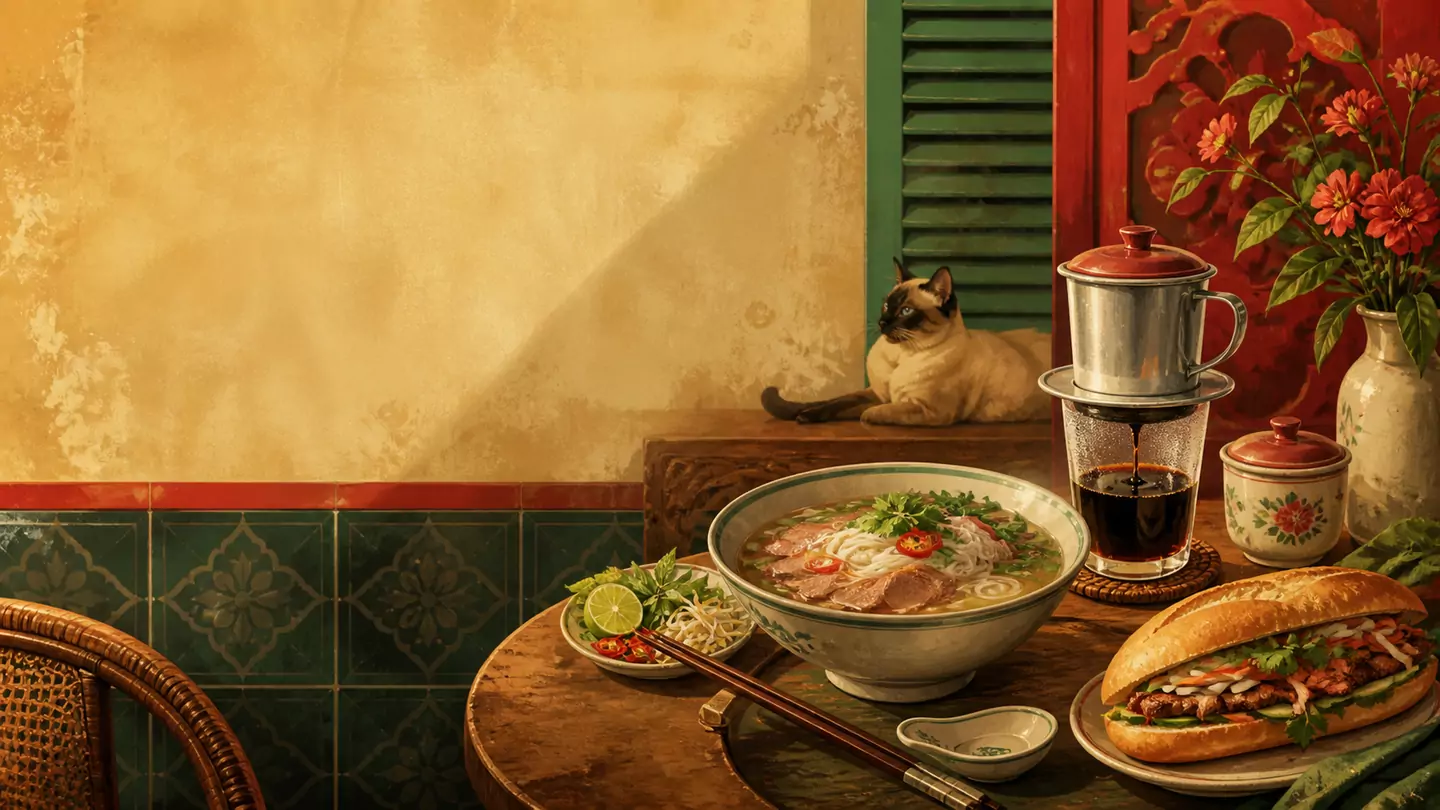
Vintage 1986 sits within Siamese Cat Café, whose menu includes Vietnamese dishes alongside other café and restaurant choices. That range can be useful. It does not mean a good meal needs to sample every section.
Start with what cannot be compromised
Ask about dietary requirements before anyone proposes sharing. Separate allergies and strict ingredient avoidance from dislikes, spice preferences and appetite. “We can pick it off later” is not a reliable solution to an ingredient that was already used in a sauce or during cooking.
Let each guest speak for their own needs. Our dietary-ordering guide provides specific questions for the kitchen. Once those are clear, you can discuss taste without repeatedly reopening the whole order.
Give each hungry person an anchor
An anchor is the part of the meal someone genuinely intends to eat: a bowl of noodles, a rice plate, a sandwich or another main. It is a planning idea, not a fixed portion rule. Ask the team about size where you are unsure.
People with smaller appetites may prefer to share something, but agree on that explicitly. Otherwise, one guest orders a main and discovers that it has quietly become everyone else’s tasting plate. Sharing is more comfortable when it is planned rather than assumed.
A guest deciding between familiar flavours might use our chicken-versus-beef phở comparison. The rest of the group does not need to have the same answer.
Add contrast, not just quantity
Once the mains are chosen, ask what one additional dish would contribute. A different texture? Something easy to share? A dessert everyone actually wants? “It looks good” is a reason to consider a dish, but not a reason to ignore what is already on the order.
For example, a table with several substantial mains might begin with one shared plate instead of several overlapping starters. That is an illustrative approach, not an official set or a guarantee about how many people a portion serves.
Check the total using current prices, including drinks and any extras, rather than calculating from an old screenshot. Set a comfortable budget early if the group intends to split the bill.
Decide what “sharing” means
Use clean serving utensils and establish which plates are communal. Keep sauces separate until everyone understands the ingredients. Ask the restaurant about individual plates, service order or bill arrangements instead of assuming they can accommodate every preference at a busy moment.
Ordering in stages can reduce guesswork, but it may also mean a second wait. Ask whether that works for the kitchen and your schedule. It is not sensible to promise a quick departure while leaving half the meal undecided.
Leave a little room for choice
Dessert can be a later decision if time and availability permit. The person who was “not hungry” at the beginning may genuinely want cake, while the enthusiastic starter-orderer may be finished after the main. Appetite is allowed to change.
For a celebration rather than an ordinary meal, use the small-birthday checklist and contact the team about arrangements. For lunch today, keep it simpler: agree on needs, choose the food each person wants, add only what improves the table, and enjoy the fact that different tastes do not have to produce a complicated meal.
Continue exploring
Chicken or beef phở? Choose the bowl you actually feel like eating
Bạc xỉu or cà phê sữa đá? Decide whether milk or coffee should lead
A small restaurant birthday: the details to settle before the cake arrives