
Pâté, mayonnaise, butter, egg or fatty meat brings depth and softness.
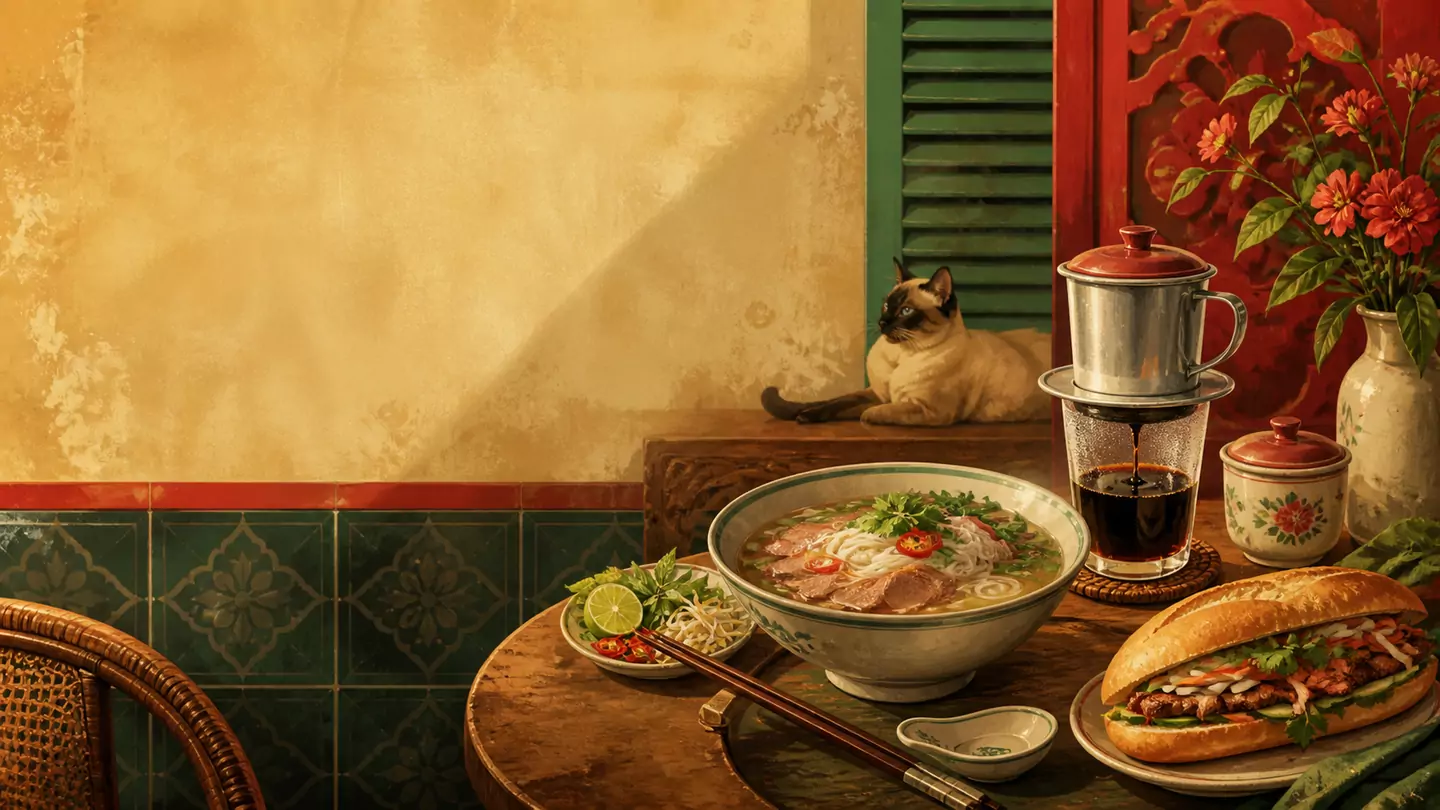
Vintage 1986 Journal
What Makes a Bánh Mì?
A crisp loaf works only when richness, freshness and acidity stay in balance.
A bánh mì succeeds as a piece of edible architecture. The loaf must crack before it yields; rich fillings need pickles and herbs; sauce has to connect the layers without soaking away the bread’s character.
What makes a bánh mì a bánh mì?
Start with a light Vietnamese baguette, open it without cutting all the way through, and build contrast inside it: savoury protein or egg, a rich spread, crisp cucumber, pickled vegetables, fresh coriander, seasoning and—if wanted—chilli. Not every bánh mì contains every one of those parts, but a good one usually moves between crisp and soft, rich and sharp, fragrant and deeply savoury.
Calling it simply a “Vietnamese sandwich” is useful but incomplete. The baguette carries a history of French influence, while Vietnamese cooks made the form their own through local ingredients, regional tastes and everyday practicality. Vietnam Tourism notes that the baguette arrived more than a century ago and was repeatedly reinvented across the country. The important word is repeatedly. Bánh mì is a living format, not a museum recipe.
The bread has two jobs
The crust should be crisp enough to scatter a few flakes when you bite, but the loaf should not fight back like a dense European baguette. Inside, the crumb needs enough air to accept fillings without becoming a solid wall of bread. That combination lets a bánh mì feel substantial while remaining quick and light in the hand.
Bread also controls time. A warm, freshly assembled sandwich has the strongest contrast. As sauce, meat juices and pickle liquid migrate into the crumb, the flavours mingle but the crust softens. That is not necessarily a failure—many people happily carry bánh mì for later—but it explains why the first bite at the table can be especially vivid.
When assessing a bánh mì, notice whether the loaf supports the filling rather than dominating it. Too much dry bread makes even excellent pork or pâté feel distant. Too fragile a loaf collapses under sauce. The best structure gives each layer a moment and still holds together until the end.
Five forces inside one loaf
Grilled pork, chicken, beef, meatballs or seasoning provides the centre of gravity.
Pickled carrot, daikon or papaya cuts through rich fillings and wakes up the next bite.
Cucumber and coriander add cool crunch and aroma rather than mere garnish.
Chilli and a house sauce join the layers. They should travel through the sandwich, not drown it.
You can remove or change one force and still have a compelling bánh mì. A fried-egg version may be much simpler than one packed with pork, pâté and vegetables. A vegetarian loaf can use tofu or egg as its savoury core. What matters is whether the remaining parts still create movement. A sandwich that tastes identical from first bite to last may be generous, yet flat.
There is no single official filling
Regional and personal variation is built into bánh mì. Vietnam Tourism’s own guides describe roast pork, char siu, Vietnamese ham, fish cake, egg, pâté, pickled vegetables and many other combinations. Ho Chi Minh City versions may be lavish with meats and house sauce; Hội An has its own celebrated shops and rhythms; a home breakfast can be no more complicated than warm bread and eggs.
This makes “Is it authentic?” a less useful first question than “Does the composition make sense?” Authenticity matters when a restaurant falsely claims a history or origin. It is less helpful when used to pretend that millions of Vietnamese diners all agree on one fixed list of fillings. A bánh mì should be recognisably grounded in the form while leaving room for the cook and the place.
Condiments deserve the same freedom. Chilli can be essential to one diner and distracting to another. At Vintage 1986, several bánh mì choices allow chilli sauce or no sauce. That is not a test of courage; it is a practical way to keep the sandwich balanced for the person eating it.
Choosing a bánh mì at Vintage 1986
Begin with appetite. The fried-egg bánh mì is the straightforward breakfast choice. Mixed grilled pork and pâté offers the layered richness many first-time diners expect. Shredded chicken is gentler; beef, pork meatball and crispy pork move toward fuller savoury or textural territory. If several versions sound good, choose the filling you would enjoy even without the fame of the name.
A drink can change the experience. Vietnamese coffee with condensed milk echoes the sandwich’s richness, while a black coffee creates a sharper finish. Tea or juice may keep a heavily filled bánh mì feeling lighter. If you are sharing, fresh rolls or a salad can add a different temperature and texture without repeating the bread.
Use the live menu for the current bánh mì selection, prices and optional choices. Then visit the Vintage 1986 restaurant page for the Bangna location and the relationship with Siamese Cat Café.
Editorial sources
Historical and regional statements are based on Vietnam Tourism’s bánh mì features and tourism-board recipe material. The five-part balance is an editorial tasting framework, not an official national definition.