
The photograph has done its job. You have already imagined the cat on your sofa, and perhaps given it a new name. Before ordering a bowl with that name on it, have the conversation that matters more: can your home meet this particular cat's needs, and what do you still need to know?
Before adopting a rescue cat in Thailand, ask about the cat's documented history, daily behaviour, care needs and adoption conditions. Check your housing arrangements and household agreement before making a commitment. Then decide how care will work during an ordinary week, an unexpected expense and a future move.
This is a guide to that decision, not a national adoption rulebook. Different rescues and foster carers use different processes. A useful question is one that replaces an assumption with an answer you can act on.
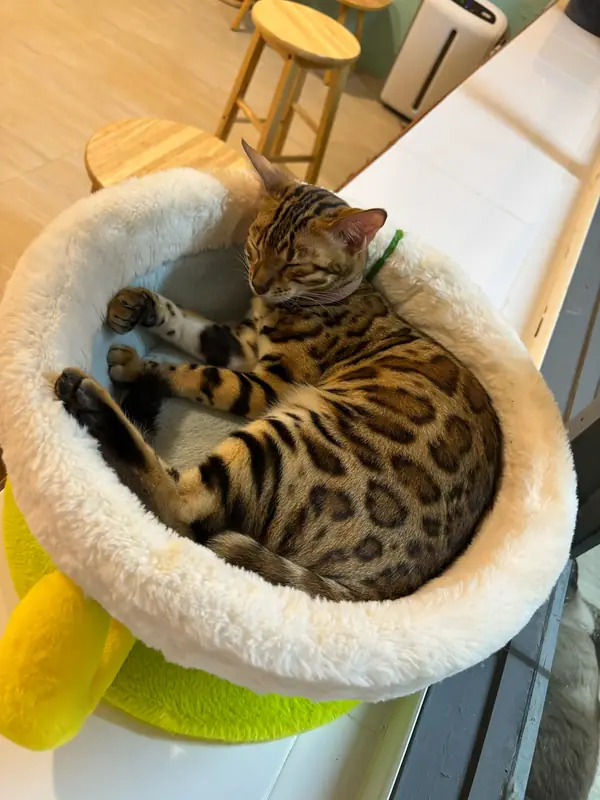
Start with the people and the home, not the shopping basket
Everyone who will live with the cat needs a genuine opportunity to agree. “They will love it once it arrives” is a gamble with both a relationship and an animal's home. Talk about allergies, existing pets, visitors, working hours and who is actually willing to provide care.
If you rent, check the tenancy agreement and obtain the permission that applies to your home. For a condominium, check the building's requirements as well. A landlord saying yes does not tell you everything about the building's rules, and seeing another resident with a pet does not establish your own position.
Look at the physical space with the cat in mind. Can doors, windows and balconies be secured appropriately? Where can the cat withdraw without being followed? Can you keep existing animals separate while you follow an introduction plan agreed with the rescue or veterinarian?
You do not need a home that looks like a pet catalogue. You do need a home where the practical problems have been addressed before the carrier arrives.
Ask who is responsible for the adoption
Find out who currently cares for the cat, who can authorise the adoption, and who will provide the information and records. A social-media page that shares photographs may not be the organisation managing the placement.
Ask how the process works, what information the rescue needs from you, whether there are fees or other conditions, and what any payment covers. Request a written explanation of the agreement. Do not assume that one organisation's arrangements apply across Thailand.
A reasonable conversation goes both ways. You should expect to describe your household, while the responsible carer should explain what is known about the cat and what remains uncertain. An incomplete early history does not automatically make a rescue unreliable. Pretending to know everything is a different matter.
Make sure there is a contact you can reach after the handover. The person who makes the initial introduction is not always the person providing ongoing support.
“Friendly” is not enough information
Ask what friendliness looks like in daily life. Does the cat approach familiar people but hide from strangers? Does it enjoy sitting nearby without being picked up? What happens around visitors, children or other animals? In what setting were those observations made?
These questions give you a better picture than asking whether the cat is “good.” A quiet cat in a busy room may behave differently in a familiar space. A cat that has lived with another cat has not necessarily been comfortable with every animal it has met.
Describe your own routine honestly. A household with young children, regular visitors or long absences needs to discuss those details rather than hope a breed label predicts the outcome. Children can participate in care, but an adult needs to remain responsible for the commitment.
Also ask whether the cat has a close relationship with another animal and what the carer recommends about keeping them together. Do not promise a pair simply because the idea sounds sweet; check whether your home and resources suit both cats.
What health information can you actually take home?
Request the available veterinary records, including recorded vaccinations, sterilisation, previous treatment, current medication and any follow-up the treating veterinarian has recommended. Check which details are documented and which are estimates or reports from an earlier carer.
A record of a test or vaccination is not a promise that a cat can never become ill. Ask a veterinarian to interpret records and advise on the next steps for the individual cat and your household. This is especially relevant when other animals already live with you.
If the cat has an ongoing condition, ask for a realistic explanation of the care involved and discuss it with the treating professional. Do not rely on a casual assurance that the condition is “nothing” or assume it makes a good home impossible. The useful issue is whether you can provide the actual care required.
Before collection, know whom to contact if the cat becomes unwell and where you would seek veterinary help. Do not change or stop prescribed treatment based on a social-media reply or a general article.
Plan for a Tuesday, not only the first weekend
Think through an ordinary working day. Who checks food and water? Who cleans the litter tray? Who has time to notice changes, provide interaction and follow the agreed care routine? If the answer to every question is “we will work it out,” the plan needs another evening of discussion.
Build your budget from current costs you have checked locally. Include regular supplies, routine veterinary care, an emergency provision and care while you travel. Avoid treating an adoption fee as the total cost of bringing a cat into your life.
Agree on a backup person, not merely the idea of one. Check that they are willing, can access the home when appropriate, and know where the care instructions and veterinary contact are kept. A friend who enjoys cat videos has not necessarily agreed to look after your cat during a hospital stay.
Our Siamese cat care guide is a separate resource for ongoing routines. The decision here comes earlier: can your household sustain the care this cat needs?
Discuss settling in before the handover
Ask what food, litter and daily routine the cat currently knows, and what the carer recommends for the first days. Prepare the agreed quiet space and a secure carrier before collection. Request instructions you can refer to after the excitement has passed.
Ask how introductions to children and existing pets should be handled, what changes should prompt a call, and whom to contact. Do not promise yourself that the cat will be affectionate on the first night. It may need time and distance, and different cats adjust differently.
There is an important boundary here: patience does not mean ignoring possible illness. If you are worried about eating, breathing, toileting, pain or another change, contact a veterinarian rather than dismissing everything as settling-in stress. A generic timetable cannot assess an individual animal.
A future move belongs in today's conversation
If you may leave Thailand, change accommodation or travel frequently, discuss that before adopting. Work out who remains responsible and what a realistic plan would involve. Do not assume you can simply find another home at the last minute.
International relocation requires separate, current advice about the destination, transport and veterinary preparation. This article does not provide an export procedure or guarantee that a cat can travel with a particular flight. Unresolved travel questions are a reason to investigate before committing.
Also ask the rescue what happens if a serious problem arises after adoption. What support can it offer? What does the agreement say about rehoming or returning the cat? Do not assume a foster home can take an animal back immediately, and never abandon it at a café or shelter.
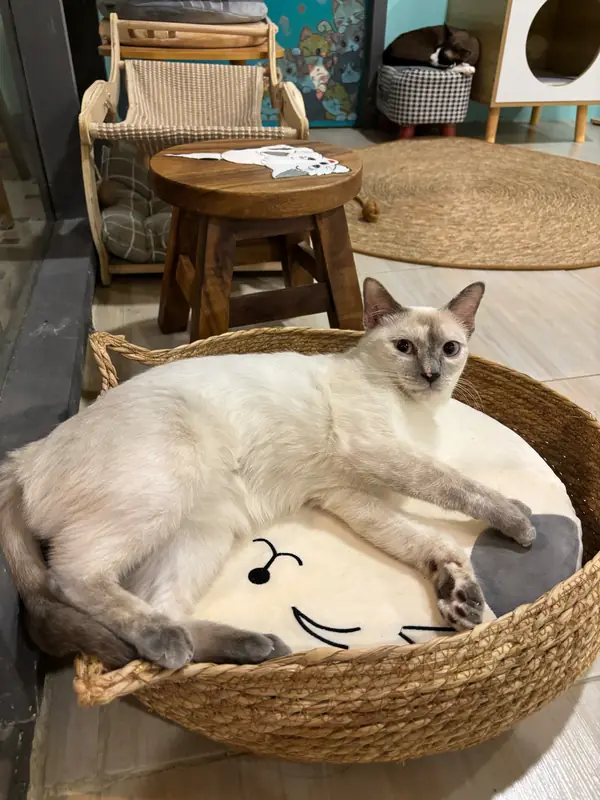
You are allowed to decide “not yet”
If your housing, finances or long-term plans are unsettled, waiting can be the responsible choice. You can still help rescue cats without adopting while addressing the part of your plan that is missing.
At Siamese Cat Café, our cats are permanent residents, not an adoption list. Our resident stories show why we want the conversation to continue beyond the moment an animal finds a home. That is also the purpose of our proposed Siamese Cat Adoption Day.
Before you say yes, write down what you know, what you need to ask, and who will answer it. The bowl with the new name can wait. A clear plan is the more useful welcome gift.